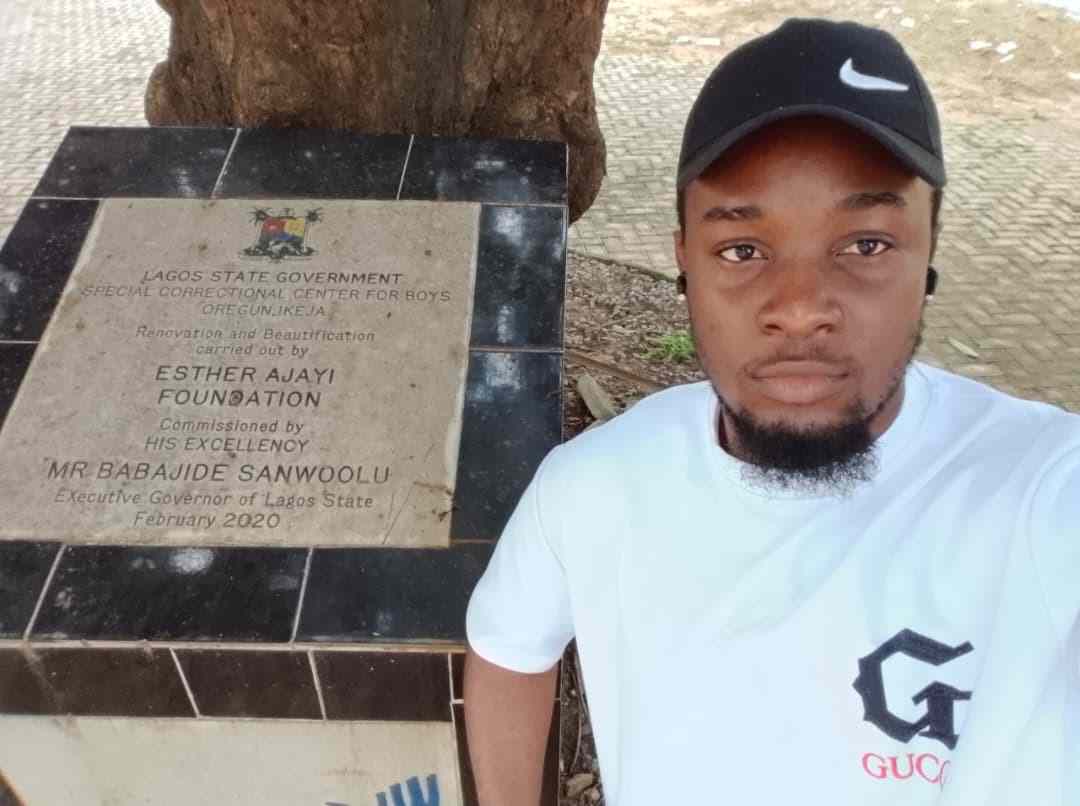
Have you ever wondered what a correctional centre for juveniles looks like? How do the children get there? What crime did they commit?
Grab a drink. Let me share my experience visiting the Special Correctional Centre for Boys in Oregun, Lagos.1
Sometime around late November 2025, a friend who works at a fire service procurement company told me about her day at a correctional centre for boys. Her company had some facility maintenance work there, and that conversation was the first time I heard about the centre.
Before then, I hadn't really thought about the fact that there was a juvenile facility in my city and that there were actual children living there. Sometimes we get so used to our own freedom that we unknowingly start taking it for granted.
Months later, I joined the Elevation Missions Outreach and took on the role of Welfare Coordinator. This coincided with our local community impact month in August, and one of the places we decided to visit was the Special Correctional Centre for Boys.
I was genuinely curious about what I would find there.
Around the same time, I had ordered some new clothes from Temu 2 which, unfortunately, didn't fit quite as well as I had imagined. Apparently, knowing my own clothing size is still a skill I need to work on.
As it turned out, the clothes already had another purpose.
On the scheduled day, we arrived at the centre, took a few pictures outside, and were ushered in to meet the boys. We spent about two hours with them.
How do children get there?
Before the visit, I assumed that a child would only end up in a correctional facility after committing an offence, becoming difficult for their parents to manage, or getting involved in some form of delinquency.
The reality was more complicated.
From conversations at the centre, I learned that some boys had not necessarily committed a crime. Some had been found living or wandering on the streets without a stable home and were brought into the system for care and protection.
This was the case of 13-year-old Victor (name changed)3.
I was told that he had lost his parents and had no relatives, and that he had been picked up from the streets and brought to the centre. He was visibly one of the youngest there, and honestly, everything about him just broke my heart.
There were also boys whose circumstances involved alleged offences. James (name changed)3 spoke about being sent there following an allegation of sexual misconduct.
For children involved in criminal cases, some may also remain in juvenile facilities while their cases move through the legal process.
What became clear very quickly was that the boys weren't all there for the same reason.
What happens each day?
Inside the facility were classroom blocks ranging from Primary 1 to Primary 6.
From what I observed and was told, a typical day includes morning devotion and classroom activities. Some of the older boys also participate in vocational training such as tailoring and carpentry.
Nonprofit organisations, religious groups, and other visitors occasionally organise seminars, training sessions, and outreach programmes. During our visit, the boys gathered in the hall for the activities we had planned.
When do they leave?
I can't say with certainty.
The boys were there under different circumstances, so their cases and eventual reintegration would not necessarily follow the same timeline.
One of the older boys told me that their ages ranged roughly from 9 to 18. Beyond that, I wouldn't want to make assumptions about when or under what conditions each boy is released.
What happens after the centre?
Reintegration matters just as much as what happens while they are there.
I learned that some nonprofit organisations, religious groups, and individuals continue supporting young people after they leave, helping them adjust and rebuild their lives outside the facility.
For the rest of our visit, we spoke with the boys about their choices, social pressure, cultism, crime, and what life could look like beyond the centre.
Towards the end, I did a headcount. There were 99 boys.
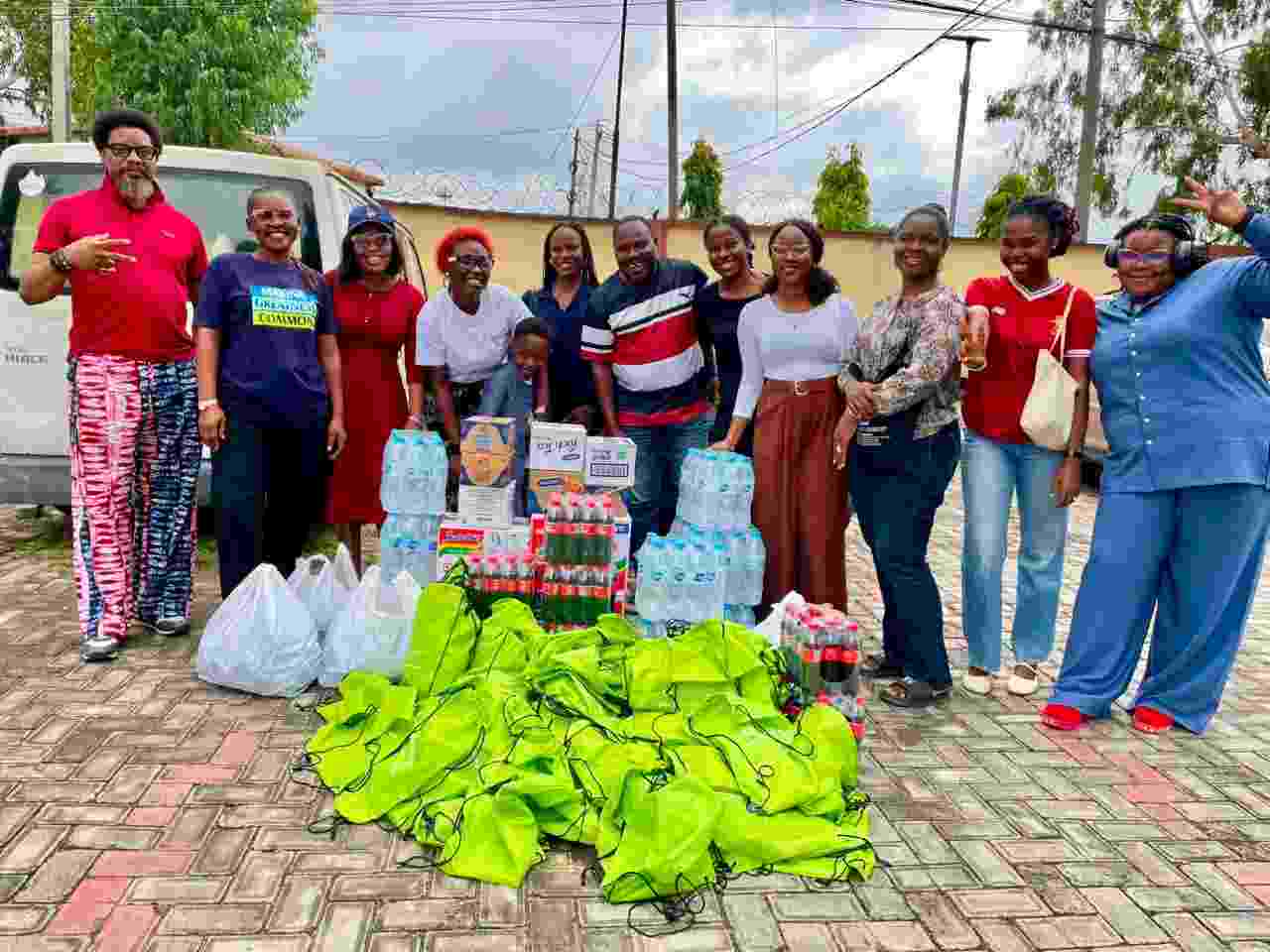
We distributed the welfare materials we had brought, and before leaving, I called Victor aside and gave him the clothes I had ordered earlier. I could see the excitement on his face as he collected them, and I felt an overwhelming sense of compassion towards him.
It was, and still is, hard not to think about how different our lives had been simply because I had the privilege of growing up with a family structure that protected me, corrected me, and gave me somewhere to return to. He had lost that.
Spending only a few hours with the boys made issues like poverty, hunger, education, child protection, and access to justice feel much less abstract. They are some of the same problems captured in the Sustainable Development Goals, particularly Goals 1, 2, 4, and 16.4
But for those few hours, they weren't goals written on a page.
They were 99 boys sitting in a room in Lagos.
Footnotes
-
The information in this post comes from my personal observations during the visit, conversations with some of the boys, and informal discussions at the centre. Where I could not independently verify something, I have tried to present it as such rather than as a general fact about Nigeria's juvenile justice system. ↩
-
The boys' identities are protected. Names used in this post have been changed, no photographs of the boys were taken for this article, and the internal areas of the facility are not shown in the accompanying photographs. ↩ ↩2
-
Sustainable Development Goals — A universal call to end poverty, protect the planet, and ensure peace and prosperity for all people by 2030. ↩